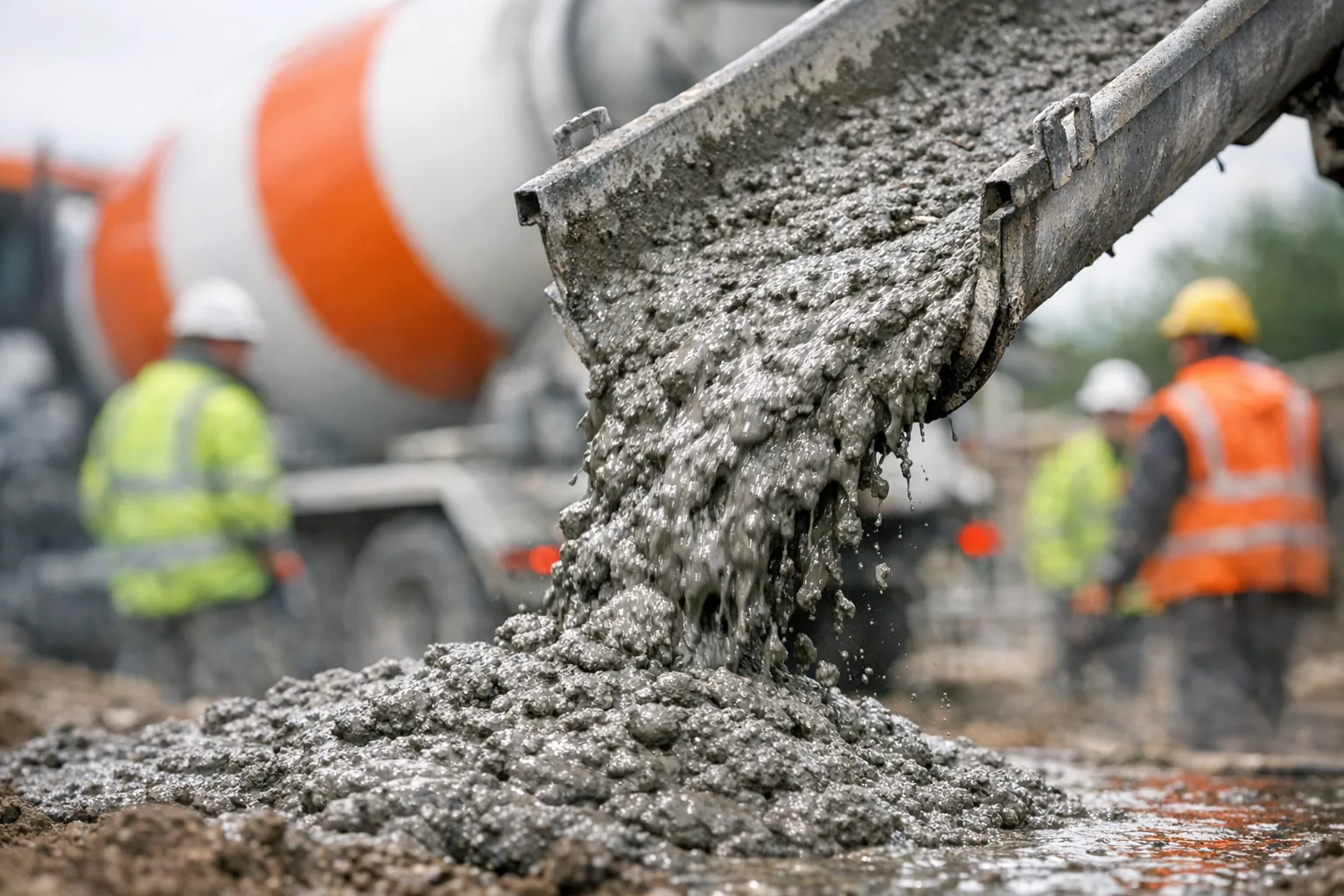
Concrete vs Cement: What's the Difference?
The terms "concrete" and "cement" are used interchangeably in everyday conversation, but they are actually two very different things. Understanding the distinction is essential for anyone planning a construction or landscaping project. In this guide, we explain what each material is, how they relate to each other, and why it matters when choosing the right product for your needs.
Quick answer
Cement is a fine powder that binds materials together. Concrete is the finished material made by mixing cement with water, sand, and aggregate. Cement is just one ingredient of concrete, around 10 to 15 percent of the mix. So a "cement driveway" is really a concrete driveway.
What Is Cement?
Cement is a fine, powdery substance made primarily from limestone and clay that have been heated to extremely high temperatures in a kiln and then ground into a powder. The most common type is Portland cement, which was patented in 1824 and remains the standard across the construction industry worldwide.
On its own, cement is not a building material. Think of it as the glue or binding agent. When mixed with water, cement forms a paste that coats and binds other materials together. It is this binding property that makes cement so essential in construction, but it is only one ingredient in a larger recipe.
Cement typically makes up around 10 to 15 percent of the total concrete mix by volume. Despite being a small proportion, it is the most chemically active component and the one that gives concrete its ability to harden and gain strength over time.
What Is Concrete?
Concrete is a composite material made by combining several ingredients:
Cement
The binding agent that holds everything together. Usually Portland cement, making up about 10-15% of the mix.
Water
Triggers the chemical reaction (hydration) that causes the cement to harden. The water-cement ratio is carefully controlled to achieve the desired strength.
Fine Aggregates
Sand or crushed stone fines that fill the gaps between larger particles and help create a dense, workable mix.
Coarse Aggregates
Gravel, crushed stone, or recycled materials that provide bulk and structural strength. These make up the majority of the mix by volume.
When these ingredients are combined in the right proportions, the result is concrete: a strong, durable material that can be poured into moulds and shaped before it hardens. The specific proportions of each ingredient determine the grade and properties of the finished concrete.

Why Are the Terms So Often Confused?
The confusion between concrete and cement is deeply rooted in everyday language. People commonly say things like "a cement driveway" or "cement mixer" when they actually mean concrete. There are several reasons for this:
- Historical usage: Before modern concrete mixes became standard, the terms were used more loosely. Old habits in language tend to stick around.
- Cement is the active ingredient: Because cement is what makes concrete harden, people naturally associate it with the finished product.
- Simplification: In casual conversation, "cement" is shorter and easier to say. Most people do not need to distinguish between the two in their daily lives.
However, if you are planning a building project, ordering materials, or speaking with a supplier, using the correct terminology avoids confusion and ensures you get the right product for the job.
The Role of Cement in Concrete
Cement is the engine that drives concrete's performance. When cement reacts with water in a process called hydration, it forms calcium silicate hydrate crystals that bind the aggregates into a solid mass. This process begins as soon as water is added and continues for weeks and months after pouring.
The amount and type of cement used in a concrete mix directly affects several properties:
- Strength: Higher cement content generally produces stronger concrete, though there are practical limits.
- Setting time: Different cement types set at different speeds. Rapid-setting cements are used when early strength is needed.
- Durability: The right cement choice can improve resistance to chemicals, sulphates, and other environmental factors.
- Workability: The cement paste lubricates the mix, making it easier to pour and compact.
Types of Cement
While Portland cement is the most widely used, there are several variations designed for specific applications:
- CEM I (Portland Cement): The standard all-purpose cement used in most general construction applications.
- CEM II (Portland Composite Cement): Contains supplementary materials like fly ash or limestone that can improve workability and reduce environmental impact.
- CEM III (Blast Furnace Cement): Incorporates ground granulated blast furnace slag (GGBS) for improved durability, particularly in aggressive ground conditions.
- Sulphate-Resistant Cement: Designed for use in soils or groundwater with high sulphate content, which can damage standard cement.
- Rapid Hardening Cement: Gains strength much faster than standard cement, useful when formwork needs to be removed quickly or in cold weather conditions.
Types of Concrete
Concrete comes in many grades and formulations, each designed for a specific purpose. The grade of concrete is determined by its compressive strength at 28 days, measured in Newtons per square millimetre (N/mm2). Common grades include:
- C8/10 (Gen 1): A lean mix used for blinding, kerb bedding, and non-structural fill.
- C16/20 (Gen 3): A popular general-purpose mix suitable for domestic foundations and domestic floor slabs.
- C28/35 (sometimes RC28/35): Commonly used for reinforced concrete such as ringbeams and in domestic construction, such as driveways and outdoor slabs.
- C30/37 and above: Higher-strength mixes used for structural applications, commercial projects, and areas subject to heavy loads.
Beyond standard mixes, there are also specialised concrete products such as self-compacting concrete, fibre-reinforced concrete, and waterproof concrete, each formulated to address particular challenges on site. You can read more about these in our guide to different types of concrete.
Choosing the Right Mix for Your Project
When ordering concrete, the key is to match the mix to the requirements of your project. Here are some common scenarios and the typical mixes used:
Shed Bases & Garden Paths
A C28/35 mix is usually sufficient for domestic shed bases, garden paths, and light-duty slabs. This provides a good balance of strength and workability.
Driveways
For driveways that need to support the weight of vehicles, a C28/35 is commonly requested. Air-entrained mixes (PAV1 or PAV2) can also be specified for improved frost resistance.
Foundations
Strip foundations and trench fills typically require C8/10 for single storey and C15/20 for double storey buildings. Your structural engineer or building control officer may specify a higher grade depending on ground conditions.
Structural Applications
For load-bearing walls, suspended slabs, and commercial projects, C30/37 or C40/50 mixes are commonly specified along with steel reinforcement.
If you are unsure which mix is right for your project, our team is always happy to advise. We can recommend the appropriate grade based on your project details and site conditions.
Concrete vs Cement FAQs
What is the difference between concrete and cement?
Cement is a fine powder that acts as the binding agent. Concrete is the finished building material made by mixing cement with water, sand, and aggregate. In short, cement is one ingredient of concrete, making up about 10 to 15 percent of the mix.
Can you use cement on its own?
Cement on its own is not a structural building material. Mixed with only water it forms a brittle paste that cracks. It needs sand and aggregate to become mortar or concrete. For most jobs you want ready-mix concrete, not neat cement.
Is a cement driveway actually concrete?
Yes. A so-called cement driveway is really a concrete driveway. People say cement out of habit, but the poured, hardened surface is concrete, with cement as just one ingredient binding the sand and aggregate together.
What is mortar, and how is it different from concrete?
Mortar is a mix of cement, sand, and water, with no coarse aggregate. It is used to bond bricks and blocks. Concrete adds coarse aggregate such as gravel for structural strength and is used for slabs, foundations, and driveways.
Which should I order for my project?
For slabs, foundations, driveways, and bases, order ready-mix concrete by grade, for example C28/35. You rarely order cement alone unless you are hand-mixing mortar. Our concrete mix grades guide explains how to pick the right grade.
Get Expert Advice From Rock Solid
Whether you are a homeowner pouring a patio or a builder working on foundations, Rock Solid Concrete supplies the right mix for the job. We deliver ready-mix concrete across the Midlands from our plants in Coventry and Melton Mowbray, with expert advice and competitive prices.